Reflections are only that, reflections, nothing more nothing less. Often these reflections are related to books I read, but occasionally also other things. These are often written very late, very fast,  using notes from my mobile phone, so the grammar and spelling is horrible.


Bert Bolin’s ideas and vision is more alive than ever

As oil prices hit 100$ and we just left the year when climate change changed the world forever we will build on what Bert Bolin did over the last decades, long before most of us was born, let alone know about climate change.

It was amazing to lecture with him and discuss climate policy and science during the climate negotiations just before and after Kyoto. His knowledge on how climate change interacts with a society that is pushing nature over the edge was fascinating and his historical perspective on change is something I will keep in all the work I do.

Sweden now have two international profiles left in the field of climate change, Bo Kjellén and Anders Wijkman. It is time for someone from our business community to step forward.

PS
We’ll make it Bert, and if not, at least we tried.

The day oil hit 100$ (and new opportunities should become even more obvious)

It is hard to understand that it was only a few years ago when oil prices above 40$ was not seen as “realistic” (and even the last IEA report, from 2007, thought that 100$ would happen 203o and only in a high-growth scenario. When I started WWFs trade and investment work in China and India five years ago we had that as one “low possibility, but high impact scenario”. Then we could not use this in relation to donors and in communication in OECD. In China and India they were willing to discuss the possibility of the consequences of such a price increase. Today I still feel that these countries often are ahead of us (even if we say it, little seems to happen).

The opportunities are amazing though and I really look forward to a few initiatives that I hope to launch in the first half of 08, as well as the launch of a few reports (about ICT and climate change, global trade regime for sustainability and export from Baoding in China)…

But one thing that I really like to recommend is the report “Arab companies in the 21st Century” from last year… More relevant today than ever.

Art, Scribble, Simple Neoliberal Policy and the World

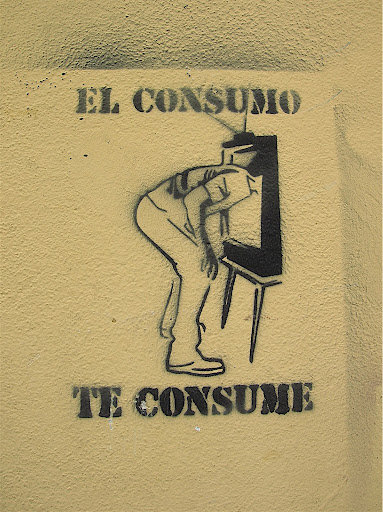
During the day after (western) New Year here in Sweden as I was trying to remove the scribbles on the facade I spent some time thinking about what differentiate art from destruction. As I don’t dislike graffiti in general, but struggle to see much meaning in the “tags” that some people spray on whatever they think is a good place to display their “tag”.

Two things make this a slight annoyance in my eyes:

1. It is unintelligent, it carries no message beside “look at me” (and the “me” is anonymous for everyone except the selected few, making it almost narcissistic)... Compare the above with these 1 2 3, I rest my case...

2. It classifies as destruction rather than creation if destruction is something that takes more time to repair that create. (following entropy is simple, creating extropy is the challenge)

While doing my best with emery paper and paint I realize that I found that the simplistic neoliberal policy that still is being promoted by many institutions, but no longer have any intellectual support aside from a few (lack of)–think(ing) tanks, is very much the same as tagging. It is very simplistic, do seldom care about those affected, promoted by people with a weak ego that seldom listen and the consequences takes much longer time to repair than it takes to impose them.

I hope that 2008 will see more creation and less destruction, more concern for the people (and other life forms) on the planet and less egoism.

For 2008 I also hope that we will see a more serious discussion and that media focus less on simplistic entertainment (by not inviting isolated lunatics from small think-tanks as often as today. They need to be invited in order not to show them that they are not being censored but that could happen in tabloids and free shows) and instead media could show the serious, interesting and discussions that is actually taking place in the fora where tomorrows world is being shaped. These fora do neither have people in black masks throwing brings through windows, not neoliberal people saying that everything is fine and we only need more trade/less regulations. This is not to say that people agree, far from it, but the different groups and countries have a more sophisticated, responsible and well argued way to get a message across. Obviously it takes more than a headline to understand the difference between a “list based approach” to environmental goods and services and a “project based”, but discussions like these are shaping the future.

Then again, maybe the next revolution will not take place in traditional media, but in cyberspace and inside our heads…

Hope all of you will have an amazing new western 2008, and hope you have saved some strength for celebration for the 7th of February when we enter into the year of the rat according to the Chinese calendar.

Four luxurious wishes for 2008

Beyond the macro challenges I work with, like climate change, destruction of the planet, poverty, WMD, manipulation with the gene-pool, tensions between different ideologies, geopolitical changes, etc, there is another world. In this world I feel there is important work to be done by clever people. Here are the things I hope that I do not need to spend time on next year this time. As you might guess I have been trying to clean up my storing spaces today to get things in order for 2008:

- Receipts:
I do not know how much money that I do not claim for expenses, I started to count a few of the piles but stopped after a while… Why not have a system that the payment with cards can go straight into a database and where you just fill in the relevant information for the expenses. Is it that hard?


- Different currencies:
While I like diversity the fact that the world still have different currencies have resulted in an ever increasing piles of bills from all over the world that I forget to bring on the next trip. Why not introduce a global “standard bill” that everybody have to accept everywhere. In order to not encourage crime the bills would have to be small and have a limited lifetime (maximum 100€ and lifetime of one year).


-Standard connections.
Long live USB! It is the best standard so far, but chargers and other connections is a sad chapter. Trying to keep everything that is needed to keep all the gadgets alive is a nightmare that most have experienced. Let USB be the one that also power the gadgets and connect sound and vision equipment…

- Washing and the dishes:
Why is the washing machines the best we have? I want something that I put my clothing in and then find it folded/ironed on the drawer again. How much do I have to pay? Same with dishes, I want to leave the table and when I’m coming back I want everything out away in the right place.


I strongly believe that the macro challenges and micro are linked. For most people it is a struggle to find time with all the “small things” and this makes it harder to focus on the big challenges (including personal development and hobbies). For those very rich that have people working for them and often take important decisions this is not a challenge so they do not see a need for innovation (instead they can focus on arguing for cheaper labor for these services). As the vast majority on the planet is still very poor this can seem like a tempting path, but I believe that this will stop innovation and turn society into a more closed mind and less innovation. It is also not sustainable as the lifestyles of the rich (including 99% of those that will read this) require too much natural resources.


As my contribution I hope during 2008 to :

- Explore how the relation between increased income and use of natural resources can be changes so that increased income will allow you to live a more sustainable life.

- Explore the balance between robots/intelligent solutions and services provided by humans under different sustainable scenarios.