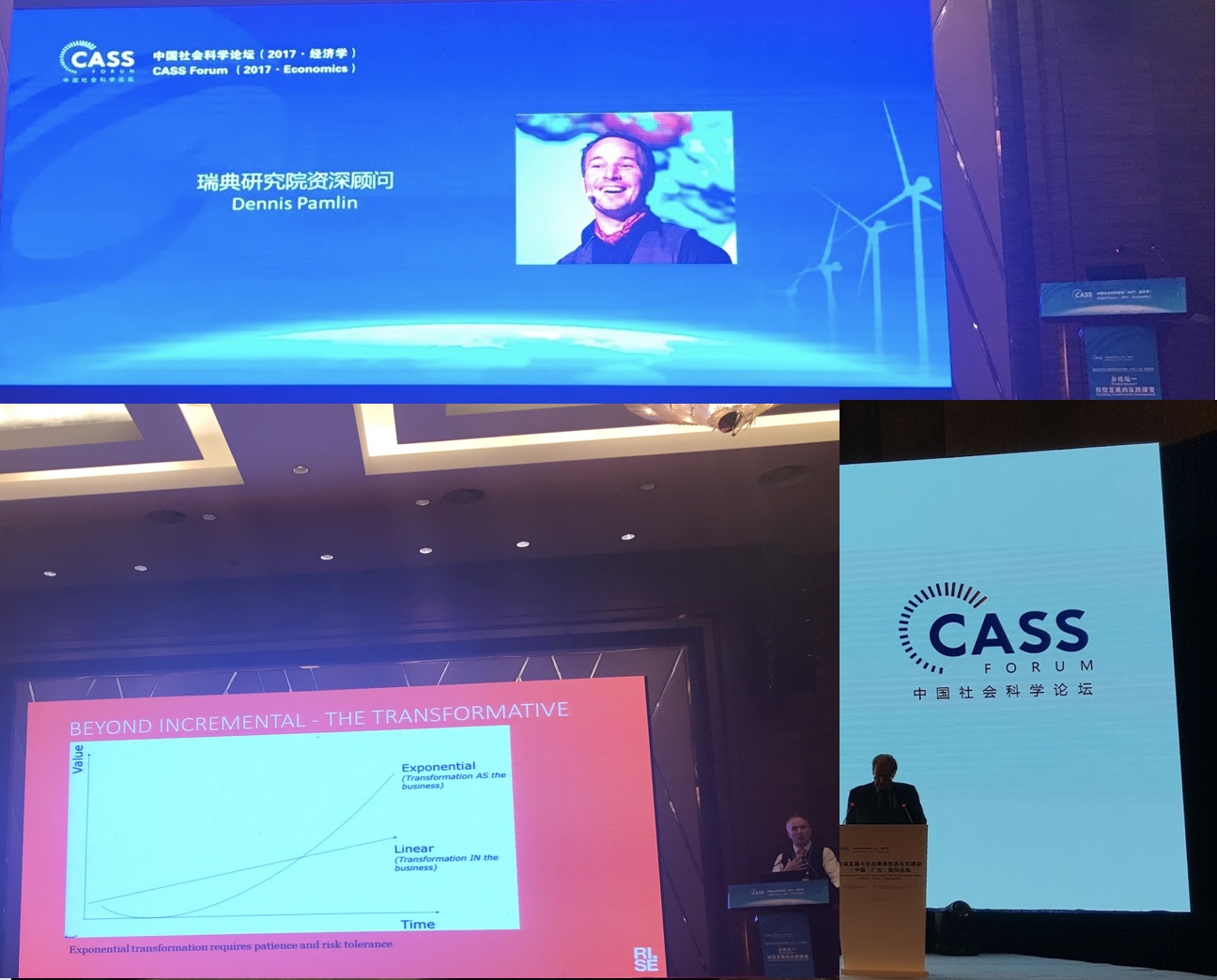
). I really like the illustration.
A new G2 in Asia to help steer the wayBy Dennis Pamlin (China Daily)
Updated: 2009-04-21 07:45
We have a financial crisis that has forced any traditional superpower to understand that the emerging economies must be given a more important role when global economic policy is being developed. So far this has resulted in G8+5, a bigger role for G20 and a number of crisis meetings.
But the financial crisis is nothing more than the tip of an iceberg and much more is needed. Below the surface we have a number of trends that require a dramatic change in how the current global governing system works, including the Bretton Woods institutions that were created after World War II.
The firm action that the current financial crisis requires is a perfect opportunity to begin looking toward a new global architecture. At the very center of this architecture are two different G2's that will play a very important role.
The first G2 is the one that has been discussed in media since the beginning of the financial crisis, that of China and the United States. This is the G2 that follows the logic of the current system. Few would disagree that the G8 that exists today is increasingly outdated and that something new is needed. The G8 was a response to the oil crisis in 1973 and when it was formed in France in 1975 it was the major Western countries that came together. That time is gone and we have a different situation today.
The two major economies on the planet should have a special relationship and the "strategic and economic dialogue" mechanism that was launched during the G20 meeting in London provides a great opportunity.
It is important that China is clear and does not allow the old, polarized agenda to dominate, so that G2 becomes a smaller, more effective version of G8. China's global role so far has been a breath of fresh air as it does not seek global leadership, but instead wants to work in collaboration with all countries and on all levels.
With the US as a major consumer and China as a major producer, we can hope for a "global collaboration" initiative. This could focus on the major challenges we face and how China and the US could together, with other countries, to find solutions for them.
These solutions could range from major initiatives with incentives that support sustainable innovation and standards that ensure future buildings are net producers of energy. Instead of being the largest problem for climate change and resource use, the buildings of the world could become the epicenter for climate-smart and resource-efficient solutions. For this to happen, China and the US must cooperate.
This G2 could also encourage micro collaborations. I myself carry around a bag with solar panels that can charge my laptop; it is made in the US and costs a lot. I would like to see these kinds of solutions being made in places like Baoding, the city south of Beijing that wants to be a center for renewable energy production that Silicon Valley is to the computer industry. At the same time, companies in China could be invited to the US to explore how joint construction projects for solar buildings can be launched.
This kind of practical collaboration could be linked to more strategic collaboration in trade, investments and finance, as well as in security policy and other important areas.
In order to identify the second G2, we must take a step back to the macro level. It is easy to see that the center of the global economy is moving east. The need to find long-term solutions for a financial system where the money can move at the speed of light will require new regulations and new institutions.
But there are other issues that are harder to see, issues that will not hit the headlines before it is too late, as they happen slower. These include issues such as the demographic crunch with an aging global population, the increased population pressure as the world moves toward 10 billion people, growing inequalities within and between countries, and finally an accelerated development of new technologies.
All these can bring humanity fantastic gifts if they are met with the right framework, but they could also drive the world into conflict and problems beyond imagination. Especially since natural resources on the planet are not enough to provide everyone with a "G8 lifestyle".
This brings us to what I think is the more interesting, and less discussed, G2 - China and India. I was fortunate to be in Delhi during President Hu Jintao's visit in 2006. During this trip, a number of initiatives were started and it is clear that the 2 billion-plus population countries share many challenges and opportunities.
Cynical observers have focused on the differences between the countries and many Western observers seem to view China and India as pawns in the power play between the G8 countries. But anyone that can do the math and look at the history of these two countries will realize that there will be a very interesting G2, whether we like to call it that or not.
By ensuring closer and more strategic ties between China and India, the world will get two countries with long, proud histories that are a welcome balance to the dominating Western narrative in most of today's global institutions. The world would also get two countries that are reflections of how the world as a whole looks like, with a mix of rich and poor people and different development paths.
The most interesting aspect of the "Chindia G2" would probably be the end of the idea of Western countries as the goal of "development". We could also get a discussion about where the world can and should go next. We need a global circular economy for that and the two countries that probably have the best opportunity to provide guidance on how this can be done in a practical way are China and India.
Every time I visit China and India, I see more and more similarities when it comes to the big challenges. With their roles as global economic engines, it becomes very important what direction those engines will move and what fuel they will use. If China and India start collaborating in a way that shows the world the two countries - which together contain about 40 percent of the world's population - can develop joint innovative strategies for global sustainability, it will be a very good step forward for this current crisis.
This G2 understands the need for innovative solutions that deliver more than incremental improvements, as this is necessary to lift people out of poverty and deliver solutions that do not result in conflict over natural resources a few years from now.
So while most people are looking for a US-China G2 along the lines of the old school, the most important G2 will probably be that of China and India. We should see these two in a relationship that is mutually beneficial.
With a global agenda that delivers global benefits, China would start building a global governance culture beyond narrow self-interest that also includes scientific consideration for the planet in a way that the current economic system has failed to do. This would be a very good start for the 21st century and a way to turn the current economic crisis into something that will benefit both the people and the planet in a way that we never done before, but that we urgently need.
Deng Xiaoping once said that a real Asian century will arrive only when China and India are developed - this time is now emerging and for it to deliver a positive outcome, the two G2s could play a crucial role.
The author is a global environment policy advisor specializing in China and India.